
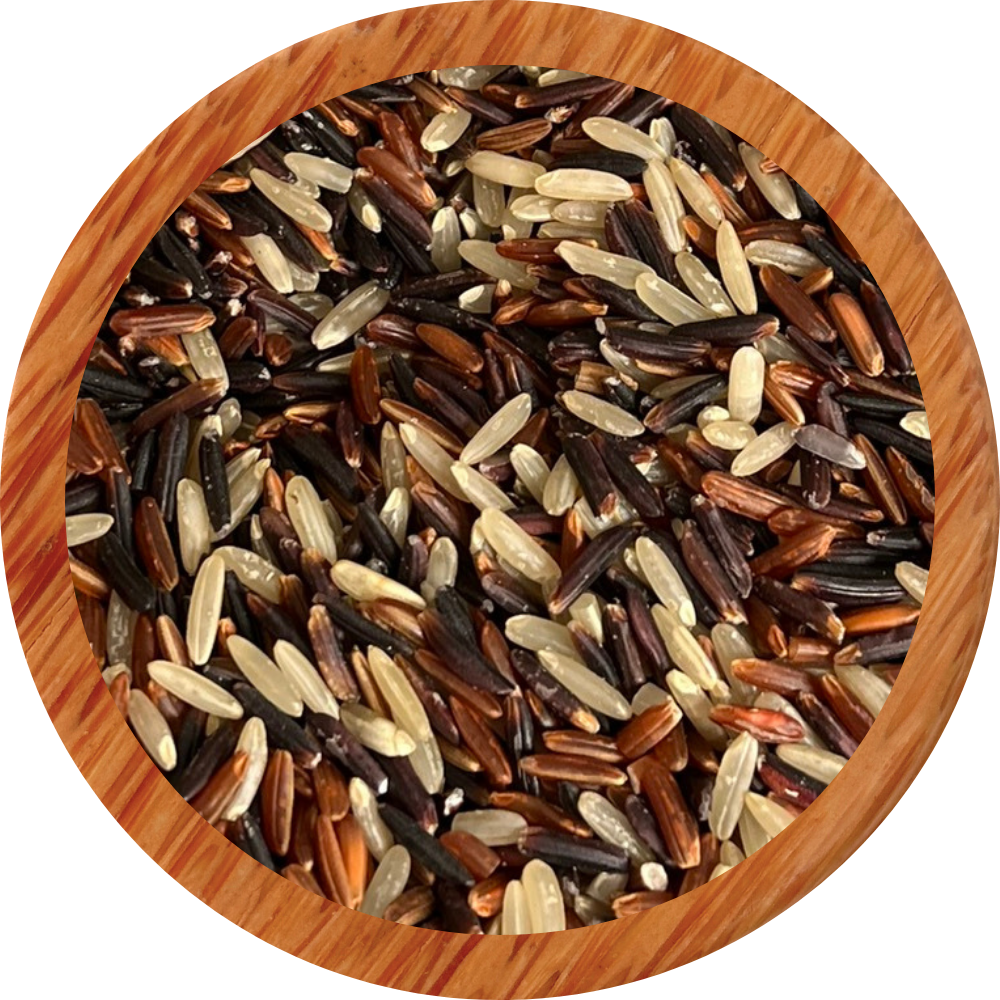
A mixed rice blend can create an attractive retail pack or a distinctive restaurant bowl. The challenge is making its components work together after cooking. A mixture that looks balanced in a transparent bag may contain grains that reach the desired texture at different points. Product development should therefore start with cooking compatibility rather than a photograph or a health-themed name.
For a private label project, the formulation is both a kitchen decision and a purchasing specification. Identify the ingredients, agree the ratios and test the instructions that customers will receive. Do not assume a catalogue’s mixed rice product has the same composition as another brand with a similar appearance.
Define the ingredients before proposing a ratio
Ask for the name and form of every proposed component. Brown rice describes a milling category rather than one fixed variety; a coloured grain needs its own identity. If the project uses ST Tím, confirm the offered product and its preparation separately. Do not silently rename it Riceberry or treat it as equivalent to the company’s black glutinous product.
Use the mixed rice product page to begin a discussion, then request the actual composition offered for your project. The product name is not a nutritional analysis. Avoid promising low glycaemic response, weight management, organic status or a specific fibre content without appropriate evidence and destination review.
Create a component trial before the blend trial
Prepare each component separately using a recorded method. Note the point at which the centre has the intended tenderness, how the surface feels and how the grain appears after resting. These observations help identify which grains may need a different preparation step. They are development findings for the tested samples, not universal times for every variety.
| Trial record | Component test | Blend test |
|---|---|---|
| Identity | Single ingredient and sample code | All ingredient codes and weighed ratios |
| Preparation | Recorded wash, soak and cooking method | Proposed customer method |
| Texture | Desired tenderness for each component | Balance within one spoonful |
| Appearance | Individual grain colour and shape | Colour transfer and finished presentation |
The question is not whether every grain becomes identical. A deliberate contrast can be part of the product. The question is whether any component remains unpleasantly hard or becomes unsuitable before the others are ready, and whether customers can obtain the intended result with a realistic preparation.
Change one development variable at a time
Start with a weighed candidate ratio and an explicitly recorded method. Adjust the ratio, water amount or preparation step individually rather than changing all three. Keep the previous result for comparison. Assess several spoonfuls from different parts of the cooked batch so an attractive top layer does not hide inconsistent distribution.
If the acceptable method requires separate cooking of components, decide whether that fits the intended offer. It may suit a professional kitchen but be awkward for a single retail bag. Do not describe a blend as easy to cook merely because an experienced development chef can manage it. The pack instruction must be usable by the target customer.
Test instructions with the target channel
Imagine a supermarket importer planning a colourful rice blend for weeknight grain bowls. After the development team approves a candidate, ask testers to prepare it using only the draft pack directions. Record the cooker type, interpretation of measures and any omitted step. A tester asking whether to soak is evidence that the instructions need work, not necessarily that the formulation has failed.
For a hotel kitchen, repeat with the intended batch size and serving format. Record portion appearance, actual preparation labour and the kitchen’s approved service conditions. Link to serving inspiration for presentation ideas, while keeping the formulation approval tied to real trial records. Do not imply that a licensed food photograph proves a specific blend was tested.
Control the formula after the creative stage
The master record should identify ingredient names, ratio basis, permitted changes, mixing process and the approved reference sample. If ratios are percentages, state that they are calculated by weight and show which stage is weighed. Agree how the supplier checks mixing and how the buyer assesses distribution. A scoop from one point in a bag cannot describe the entire packing run.
Packaging review should use the approved formulation. Ingredient naming and ordering need the destination’s requirements; the Codex standards index provides a route to its prepackaged food labelling standard as background. The importer should review the market-specific label before production. A later ingredient substitution can affect the instructions and artwork even if the bag still looks similar.
- Confirm all components and their offered form.
- Record component trials and a weighed blend candidate.
- Validate the intended customer instructions.
- Agree ratio control and change approval.
- Approve packaging from the final formulation.
Bring the target dish, sales channel and preparation expectations to an OEM discussion with Vũ Phong Phú. A well-designed mixed rice blend is a reproducible product, with visual appeal supported by a workable cooking method and a clear formulation record.