
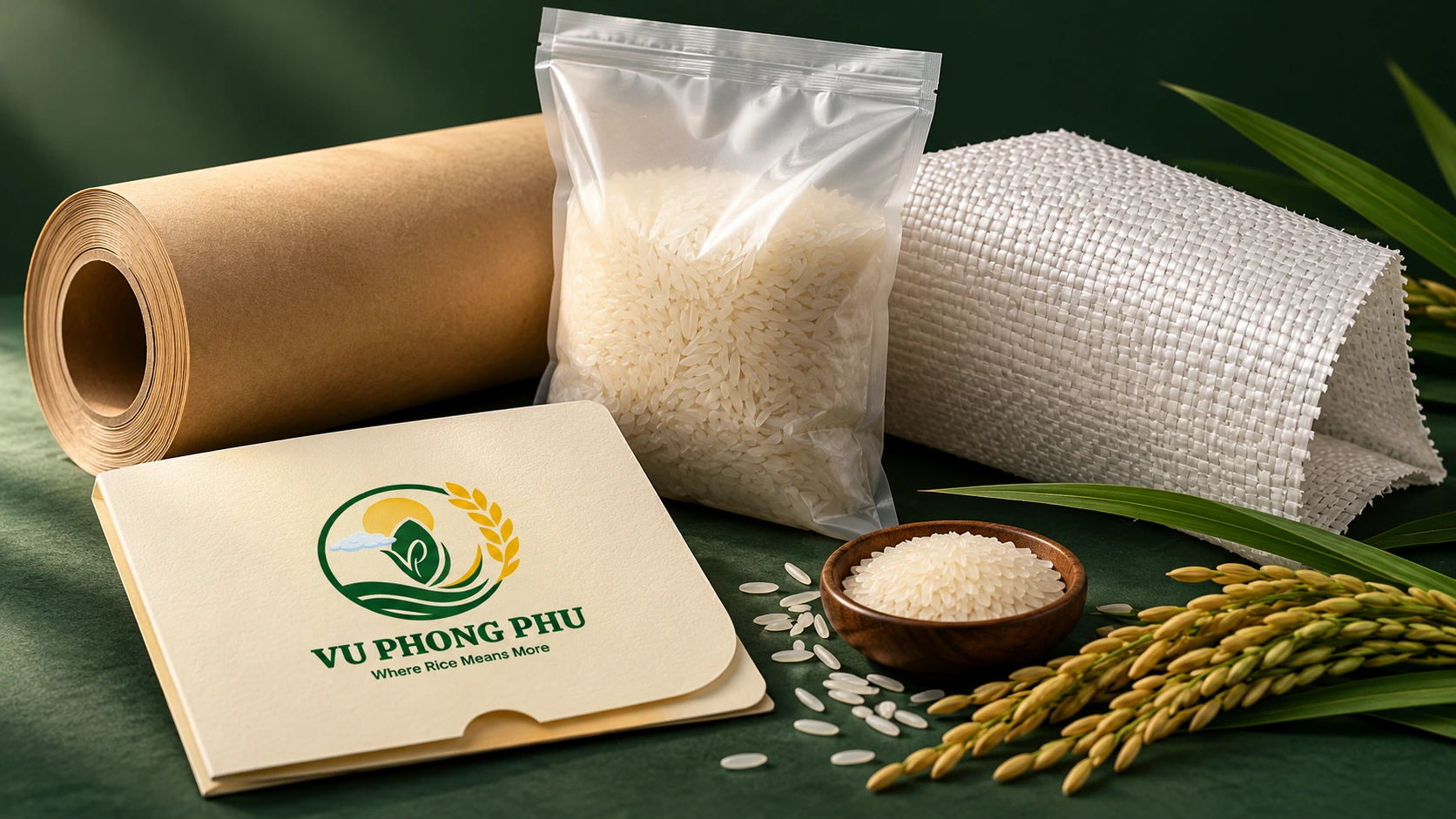
A rice packaging materials comparison should begin with the job the bag must perform. A supermarket pack needs readable branding, reliable seals and convenient handling; a foodservice bag needs to survive a different receiving and opening routine. PP, BOPP and vacuum packaging are not three interchangeable material specifications. Ask for the complete construction and its intended use before comparing quotations or selecting the most attractive sample.
Separate material, layer and packing method
PP means polypropylene. In commercial rice bags it may describe woven material, but that shorthand does not tell you every layer or the closure. BOPP means biaxially oriented polypropylene film; it may be one layer in a laminate, including a printed layer on a woven bag. Vacuum packing describes a process, not a unique polymer. A vacuum bag still needs a specified film structure, thickness, seal system and compatibility with the product and packing equipment.
Therefore request a construction sheet for each option: substrate, inner liner where used, films, printing position, adhesive or lamination system, dimensions and closure. Ask which surfaces contact rice. Document whether the proposal is a sewn woven bag, a sealed pouch or another construction. Two suppliers can both quote a BOPP rice bag while offering different finished products. A sample and a drawing make the comparison more meaningful than the acronym alone.
Compare protection using evidence
Do not infer a moisture or oxygen barrier from gloss, stiffness or premium printing. Ask for relevant material data and the test conditions behind it. The entire bag matters: seams, punctures, closures and manufacturing consistency can affect performance even when a film has promising laboratory properties. Vacuum appearance is not proof of sterility, and vacuum packing does not independently establish an expiry date. Review shelf-life evidence separately for the final pack.
Food-contact suitability also needs project-specific documentation. The FDA explanation of food-contact material components illustrates why intended use and the status of components matter in the United States. It is not an endorsement of a particular bag or a universal approval for every destination. Ask the packaging specialist and importer to review the documentation appropriate to their market and actual construction.
Test the bag in the channel where it will work
For retail, evaluate seal appearance, shelf presentation, label readability, date printing and barcode scanning on filled bags. A reflective surface or fold can make information difficult to read. For a hotel kitchen, examine carrying, opening, portion storage and the way staff identify the lot after the bag is opened. If a handle, zipper or tear feature is requested, test it with filled packs rather than treating it as decoration on an artwork file.
Transport trials should represent the agreed distribution configuration: cartons where used, pallet arrangement and handling sequence. The team can evaluate leakage, seam damage, scuffing and label survival using a documented protocol. Record the pack weight and conditions so the result is repeatable. A successful trial of a small pouch does not automatically qualify a much heavier bag. The appropriate pack sizes are a separate decision explained in retail and wholesale pack planning.
A practical three-option comparison
Imagine a buyer reviewing a woven bulk bag for kitchens, a printed laminate for supermarkets and a vacuum presentation for a specialty line. Create one comparison sheet with columns for construction, food-contact evidence, closure, handling trial, printing, packing compatibility and cost basis. Mark unconfirmed points as questions. Avoid awarding the specialty option a better protection score simply because it looks premium; the score should follow the evidence and the intended route.
Send the shortlisted samples to the people who actually receive, display or open them. Their feedback should describe an observable problem, such as a date rubbing off or rice escaping at a seam. Agree what will be corrected and how the revised sample will be accepted. Through the OEM project process, the buyer can then approve a complete packaging specification. That specification, rather than an informal name such as premium BOPP, becomes the reference for production and repeat orders.
- Construction sheet
- Food-contact documentation
- Filled-pack handling trial
- Closure inspection
- Approved production sample