
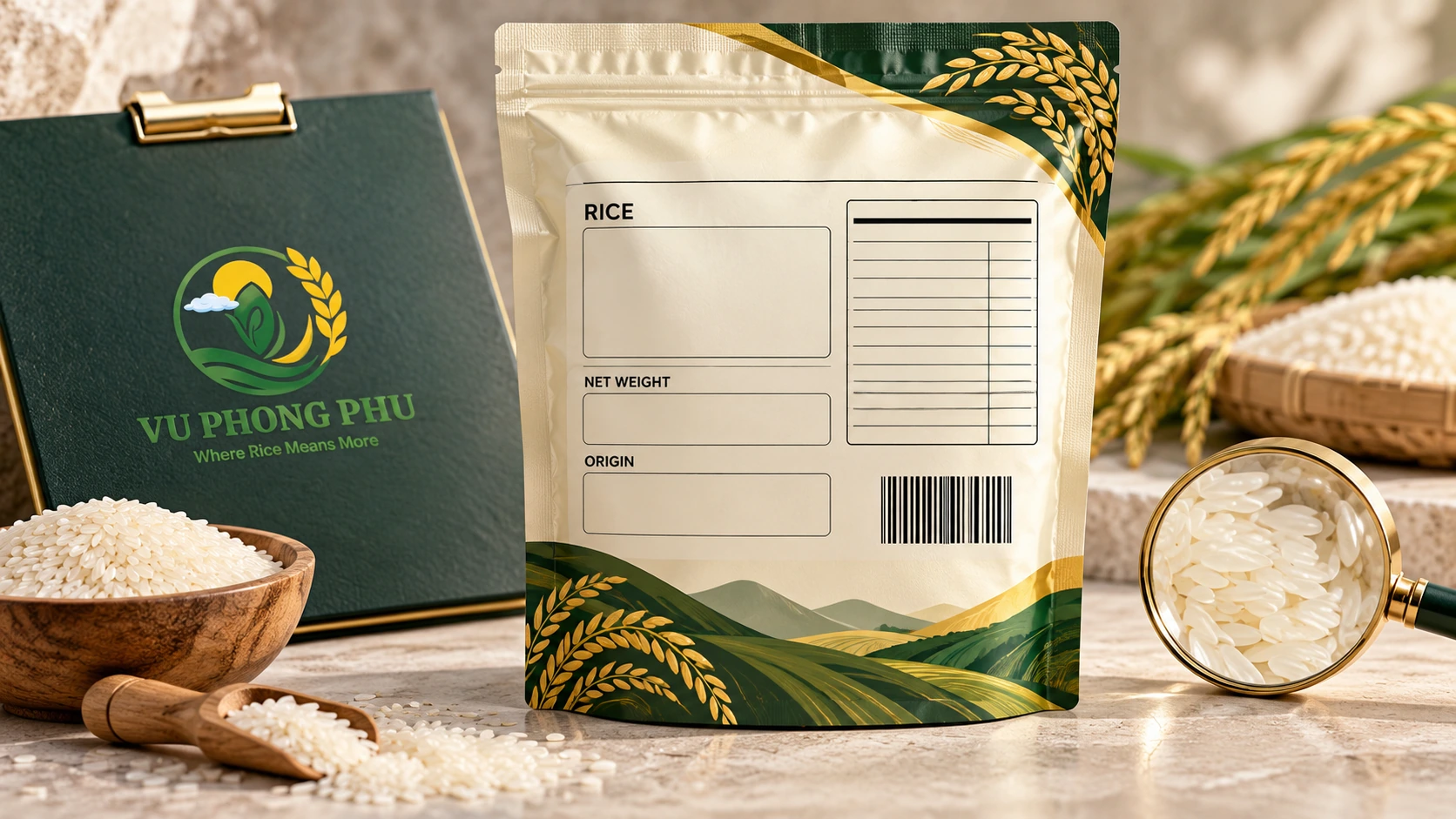
A rice label requirements buyer checklist is useful only when it starts with a named destination and responsible reviewer. An attractive bilingual bag is not automatically suitable for every export market. Product identity, date wording, operator details, claims and languages must be checked against the rules that apply where the pack will be sold. Keep this review separate from the printer's technical approval: a file can print perfectly and still contain incorrect information.
Identify the destination and selling format
Name the country, intended retail or foodservice route, product composition and final pack. Record who imports it and who supplies it to the customer. If the same artwork is proposed for several destinations, review each separately and identify differences. Do not treat Europe, the Middle East or Africa as one labelling jurisdiction. A distributor serving several countries may need several approved versions, even when the rice itself is unchanged.
Use the relevant authority's current guidance and ask the local importer or qualified reviewer to confirm the interpretation. For example, the Singapore Food Agency states that importers are responsible for ensuring imported food meets its labelling requirements. That is a destination-specific example, not a statement that identical responsibilities or label fields apply everywhere. Record the source and review date so future changes can be checked against a known basis.
Make product identity consistent across records
Check that the label name describes the actual rice or blend. Match it to the agreed specification, ingredient information where applicable, quotation and shipping records. A front-panel variety name should not contradict a back-panel generic description. Country of origin, processing information and brand ownership are different concepts; each statement needs the appropriate supporting record. Do not infer origin from the brand address or from the location where artwork was designed.
Verify net quantity, units, storage instructions, lot identification and proposed date information using the destination review. If a blend is involved, provide the composition rather than asking the designer to guess an ingredient list from photographs. Identify which data comes from the product team and which must come from the importer. The buyer document resources can help organise requests, but a company profile is not a substitute for the specific product information used on the pack.

Give claims their own evidence register
List every claim, symbol and certification mark separately. Ask what record supports it, which products it covers, who owns the permission to use it and whether its wording is appropriate for the destination. Do not assume a company-level certificate covers every portfolio item. Match the proposed product with the available quality and certification documents. Where scope or authorisation is unclear, remove the mark from the draft until the issue is resolved.
Nutrition, health and dietary wording deserve the same discipline. A purple colour does not prove a nutrient claim; an attractive wholegrain story does not establish a medical benefit. Do not copy a competitor's values into your panel. Determine whether information or claims require laboratory support, a permitted calculation or another accepted basis through the destination reviewer. Singapore's consumer label explanation illustrates the distinction between label information and regulated claims without providing a global approval template.
Review languages and variable information together
Translations should preserve the meaning of the approved product information, not add stronger promotional language. Use a bilingual reviewer for product names, instructions and cautions where needed. Check date order and the wording around variable printing so it is clear which field is being applied. The prepress proof should show where lot and date information will appear on a filled pack, rather than hiding these fields in a note outside the artwork.
For a hypothetical Singapore supermarket project, create a responsibility sheet with four columns: field, data provider, destination reviewer and approved version. The supplier confirms the product-related facts it can substantiate; the importer confirms its local details and market review; the designer applies the approved wording; the printer checks production feasibility. This example assigns practical tasks, not a universal legal allocation. No party should assume another has reviewed an unassigned field.
Freeze a reviewed label, not just a beautiful PDF
Keep the approved label file, supporting records, reviewer comments and final sign-off under a shared version identifier. Any change to composition, origin statement, claims or importer information must return to the relevant reviewer before printing. The separate artwork checklist covers technical file approval, while the OEM discussion coordinates product and packaging inputs. A clear label review prevents information errors from becoming a large inventory of printed bags.
- Destination confirmed
- Product facts matched
- Claims evidence checked
- Translations reviewed
- Version signed off