There is no single "best" Vietnamese rice. The right variety depends on how your customers cook and eat it.
This guide compares the nine varieties Vũ Phong Phú supplies by whole-kernel length, cooked texture, stickiness and typical use, so you can shortlist two or three for sample testing.
Quick comparison
| Variety | Whole-kernel length | Grain shape | Cooked texture | Stickiness | Aroma | Typical use |
|---|---|---|---|---|---|---|
| ST25 | 7.2–7.4 mm | Long and slender | Soft, smooth, glossy and dry-textured; does not stick to the teeth | Medium | Natural pandan-leaf aroma | Premium retail, restaurants, private label |
| ST21 | 6.3–6.4 mm | Long and slender | Very tender and soft; stays soft when cool | High | Mild natural fragrance | Everyday premium retail, food service |
| KDM (Khao Dawk Mali) | 7.0–7.1 mm | Long and slender | Soft and fluffy | Confirm on approved sample | Pleasant natural fragrance | Asian retail, private label |
| Jasmine | 6.7–6.8 mm | Long and slender | Chewy and firm-grained | Medium | Pleasant natural fragrance | International retail, supermarkets, food service |
| Dai Thom 8 | 6.6–6.7 mm | Medium-long and slender | Chewy and firm-grained | Medium | Pleasant natural fragrance | Retail chains, wholesale |
| OM5451 | 6.7–6.9 mm | Medium-long and slender | Soft and very sticky | Medium to high | Per approved sample | Wholesale, food service, large-volume supply |
| Nàng Hoa | 6.7–6.9 mm | Long and slender | Soft and fluffy | Low to medium | Pleasant natural fragrance | Retail chains, food service, family meals |
| Japonica | 4.7–4.9 mm | Short and round | Soft, sticky and glossy | High | Mild natural aroma | Sushi, onigiri, bento, Asian restaurants |
| Glutinous rice | 5.6–6.0 mm | Depends on selected variety | Very soft and highly sticky | High | Mild natural aroma | Rice cakes, desserts, food manufacturing |
Whole-kernel length is a range for whole kernels, not a measured batch average. Cooked texture and stickiness are VPP's product-page descriptions; final limits follow your sales contract and approved sample.
Which variety for which customer
- Premium retail or restaurants that want a distinctive, aromatic rice: start with ST25. It has the longest grain in the range and a pandan-leaf aroma. See ST25 vs Jasmine.
- Customers who want very soft, tender rice that stays soft when cool: ST21. See ST25 vs ST21.
- Loose, fluffy long-grain rice for Asian retail: KDM. See the KDM buyer's guide.
- Everyday fragrant rice with a firmer, chewy grain: Jasmine or Dai Thom 8. They are close, so test both. See Jasmine vs Dai Thom 8.
- High-volume food service or canteens that want soft, sticky rice at a practical price point: OM5451. See OM5451 for restaurants and canteens.
- Familiar, traditional fragrant rice for retail chains and family meals: Nàng Hoa.
- Sushi, onigiri and bento: Japonica. See Japonica for sushi buyers.
- Desserts, rice cakes and food manufacturing: glutinous rice.
How to compare samples fairly
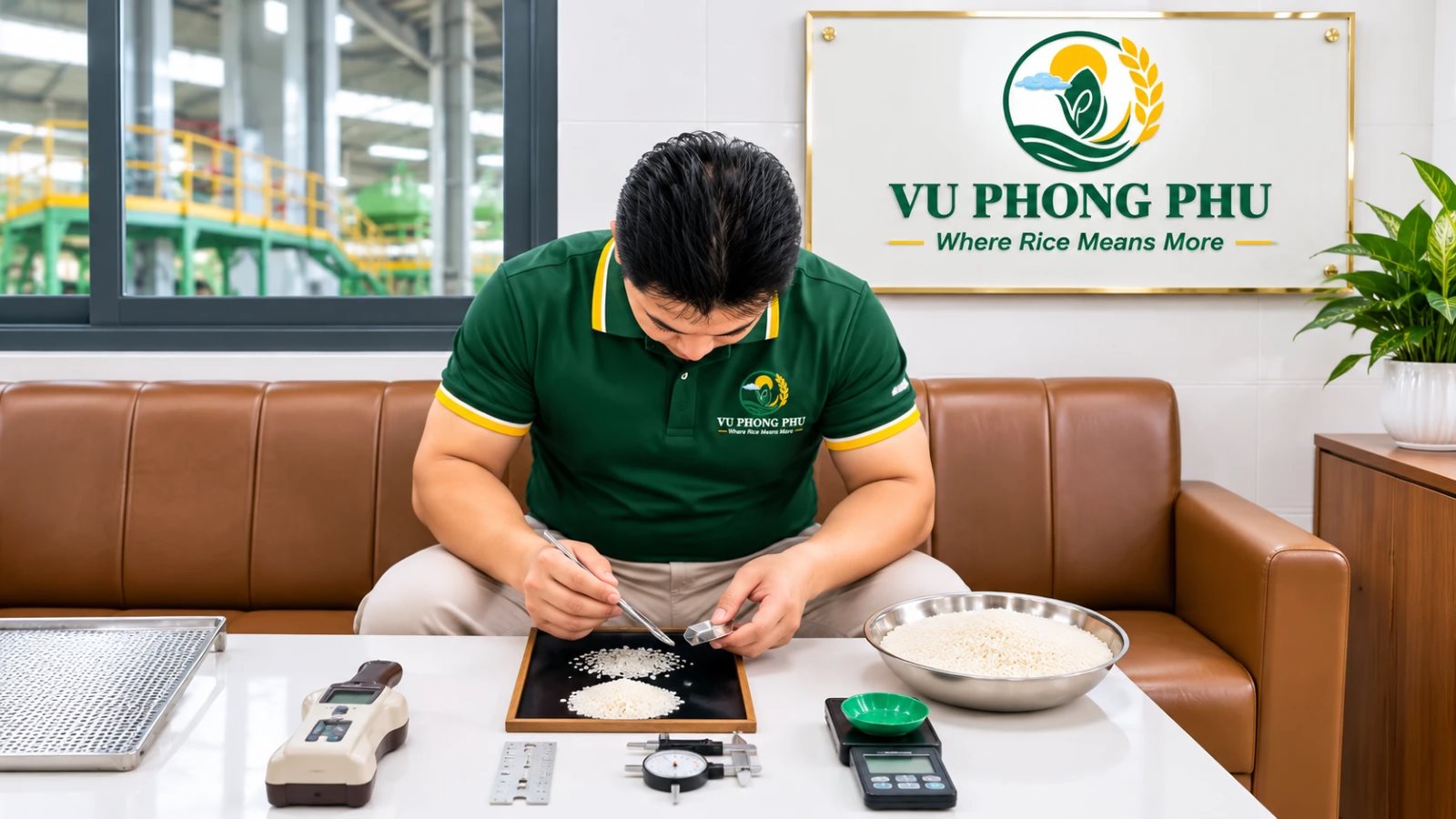
Cook every sample the same day, with the same water ratio, the same pot and the same resting time. Judge three things: texture when hot, texture after 30 minutes, and texture when cold.
A rice that tastes right hot can harden when cold, which matters for sushi, lunch boxes and canteens. Our sample evaluation checklist walks through each step, and how to read a rice specification sheet explains the parameters on the contract.
What is the same across all nine varieties
- Quality reference: moisture reference average 14.0%, maximum 14.5%; broken rice 5.0% or less, or as agreed. Final limits follow the sales contract and approved sample.
- Minimum order: one 20-foot container (about 25 MT) per variety and pack format.
- Packing: 1, 2, 5, 10, 25 and 50 kg, bulk, or custom OEM and private label packs.
- Certification: ISO 22000:2018 (manufacture of rice). Halal certificate GHC.219 covers these nine products only; see the Halal scope page.
- Samples: reference samples of 0.5–2 kg; cost and courier are agreed case by case.
Frequently asked questions
Which Vietnamese rice is best for sushi?
Japonica. It is a short, round grain (4.7–4.9 mm) that cooks soft, sticky and glossy, which is the texture sushi and onigiri need. Always run a sushi sample test, including a cold-texture check, before a large order.
What is the difference between ST25 and Jasmine?
ST25 has a longer whole kernel (7.2–7.4 mm against 6.7–6.8 mm) and a natural pandan-leaf aroma, with a soft, dry-textured bite. Jasmine is chewy and firm-grained. The right choice depends on your customers' preference, so test both.
Is OM5451 a premium rice?
OM5451 is positioned as an efficient everyday rice for high-volume supply, not a premium one. It cooks soft and very sticky and suits wholesale, food service and large distribution.
Do all varieties have the same minimum order?
Yes. The minimum order is one 20-foot container (about 25 MT) per variety and pack format. Smaller trial orders and printed-packaging MOQs are reviewed case by case.
Are all your varieties Halal certified?
Halal certificate GHC.219 covers nine named products: ST25, ST21, Jasmine, OM5451, Dai Thom 8, KDM, Japonica, glutinous rice and Nàng Hoa. Other products in our range, such as brown, red and black rice, are not covered by it.
Request samples
Tell us your market, customer type and target volume, and we will recommend two or three varieties to sample.
Contacts: John (Nguyen Dinh Phong): John@vuphongphu.com · +84 789 886 789 · Brian (Nguyen Van Hieu): brian@vuphongphu.com · +84 913 673 067
See also: Rice portfolio · Halal-certified rice · request a quotation or sample